Trade Partners


-
 Home
Home -
 Destinations
-
- Africa
- Asia
- Caribbean & The Americas
- Europe
-
 About Us
 Travel Agent Login
HomeDestinations
About UsTravel Agent Login May 28, 2026
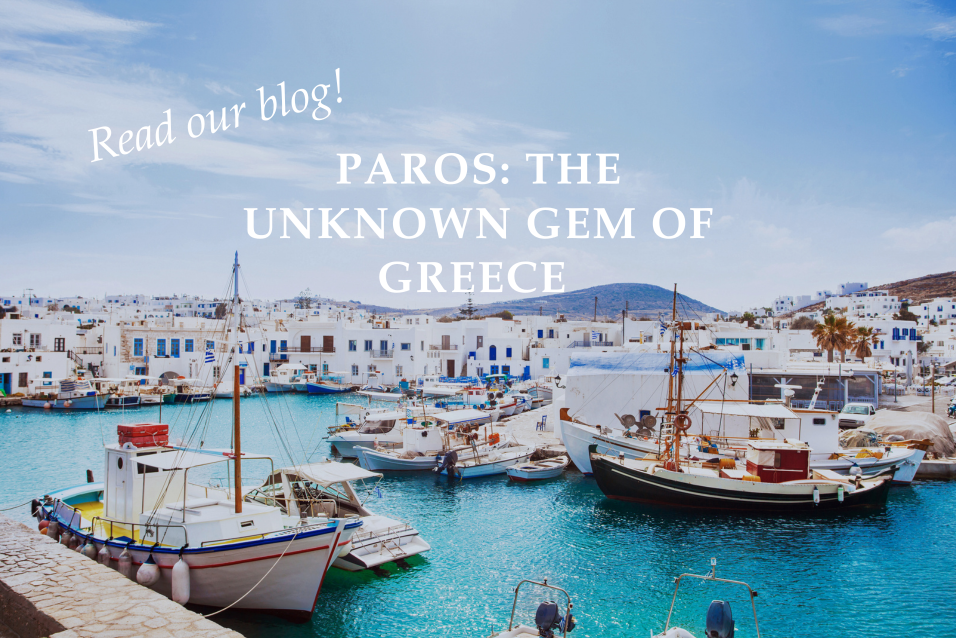
We have recently launched Paros as a new destination, adding to our luxury villa offerings across the Greek Islands. Paros is located in the heart of the Cyclades, sitting between Mykonos and Santorini. While it is significantly less crowded than its more famous neighbours, it is more cosmopolitan than some of the small islands nearby. The landscape is that of rolling hills, olive groves and some of the best beaches in Greece. It is also popular with artists for the famously beautiful light, providing inspiration for creatives for centuries. Here are some of our top reasons to visit Paros.
VIEW OUR WEBSITE TO SEE MORE OF OUR AMAZING VILLAS IN PAROS HERE
Paros has several small villages, each with its own distinct character, they are worth visiting to give you a well rounded feel for the island and what it is all about.
Parikia, the main port town, is where most visitors arrive and where the island's history is most visible. The Panagia Ekatontapyliani, the Church of a Hundred Doors, is one of the oldest and best-preserved early Christian churches in Greece, and a genuinely impressive sight. The old town behind the port, with its Venetian kastro built partly from the marble of an ancient temple, is a lovely place to wander through, and the waterfront has a good mix of cafés, tavernas, and shops without feeling overwhelmed by tourism.
Naoussa, on the north coast, is arguably the island's most photogenic spot, with a small, pretty fishing harbour lined with seafood restaurants and low-key bars, and the remains of a Venetian fortress sitting in the water at its entrance. It has started to attract discerning visitors who appreciate good food and a relaxed atmosphere, but it hasn't lost its character in the process. An evening here, eating fresh fish at a harbourside table as the fishing boats bob alongside, is hard to beat.
Inland, the mountain village of Lefkes is definitely a highlight, but one that many visitors miss entirely. Sitting at the highest point of the island, it's a beautifully preserved traditional Cycladic village with narrow marble-paved streets, flower-filled courtyards, and a peaceful atmosphere that feels a world away from the coast. The Byzantine road between Lefkes and the nearby village of Prodromos, a centuries-old cobbled path through the hillside, is one of the best short walks on the island and well worth the effort.
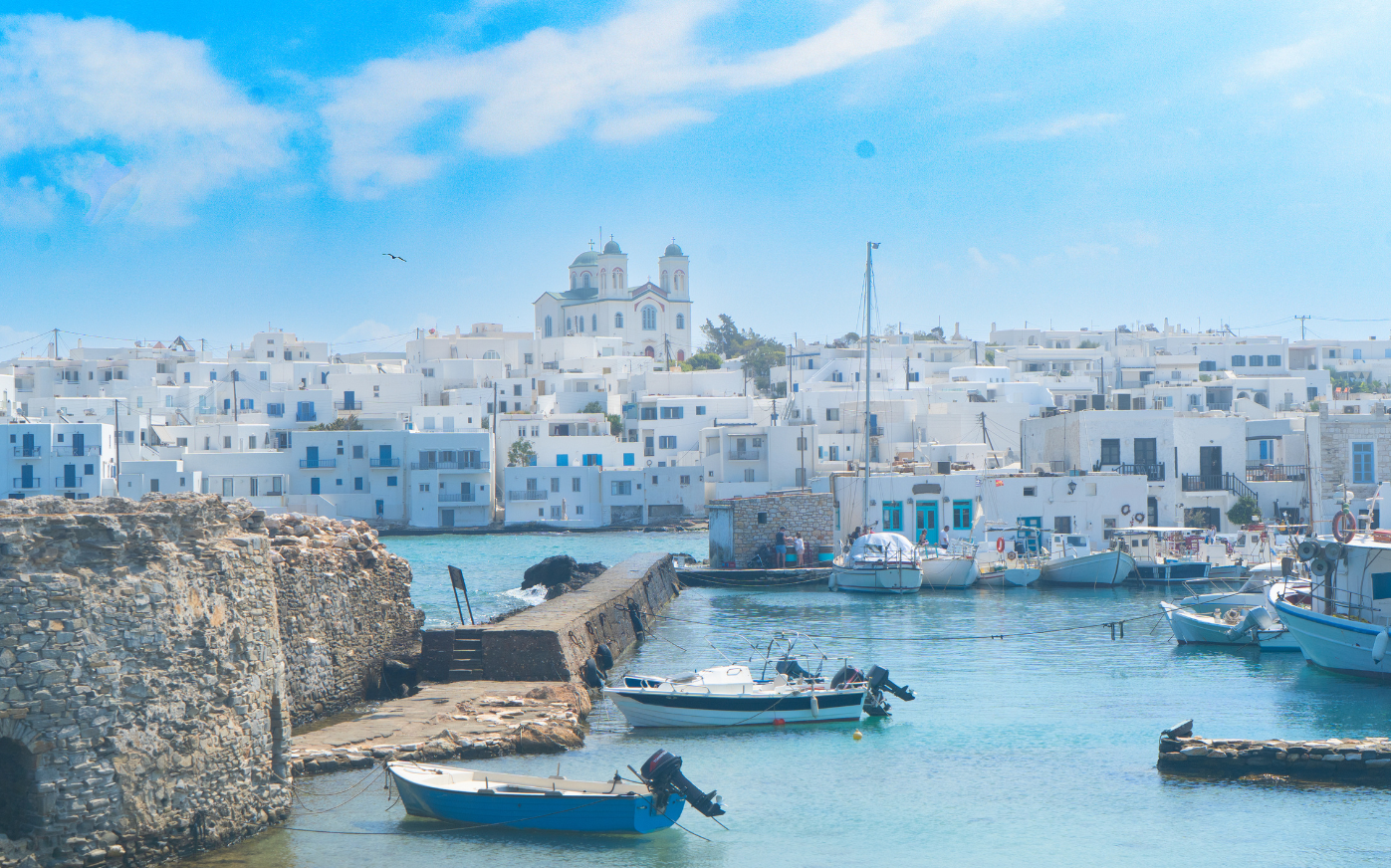
Naoussa, on the north coast.
The food on Paros is definitely one of its highlights, with many items going beyond the standard Greek tourist menu. Naoussa in particular has developed a reputation for excellent restaurants, with a mix of traditional tavernas serving fresh-caught fish straight off the boats and more modern Greek cooking that would not feel out of place in Athens. The atmosphere at almost all of them is relaxed and unpretentious, with an emphasis on good ingredients simply prepared.
What many visitors don't know is that Paros has its own wine-producing tradition, making it one of the few Aegean islands that can genuinely claim this. Local wines, particularly the whites produced from the Monemvasia grape, are well worth trying. Local cheeses, slow-cooked goat dishes, and traditional Cycladic recipes are also must-tries while visiting the island.
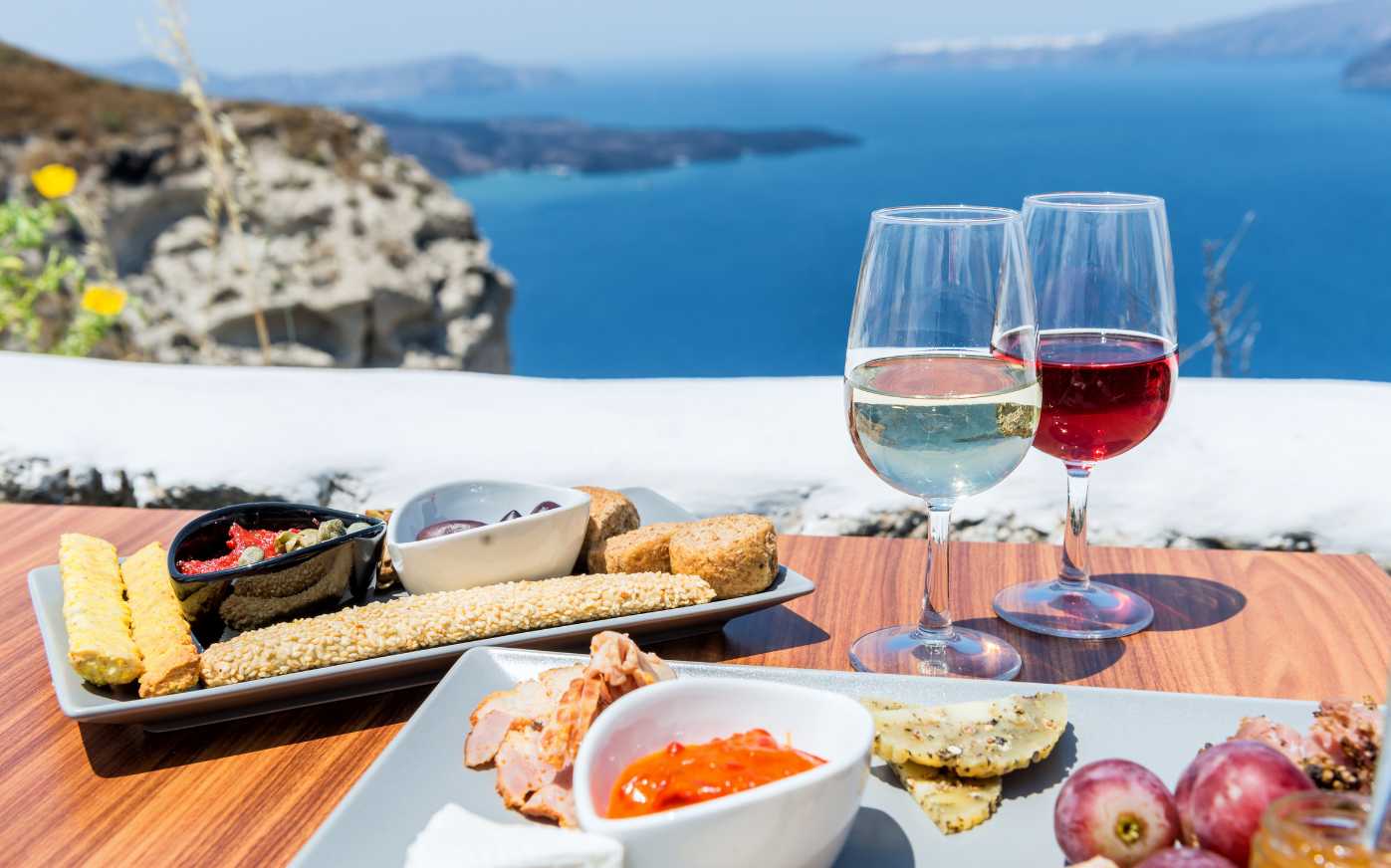
Enjoying local wines and delicacies
For a relatively small island, Paros has a great variety of beaches. Kolymbithres, on the northwest coast near Naoussa, is probably the most distinctive, with a series of small sandy coves set among sculpted granite rock formations that have been shaped by centuries of wind and water into smooth, rounded curves. There is nothing quite like it anywhere else in the Cyclades!
Golden Beach and Santa Maria on the east coast are the places to head if you like water sports. Paros is one of Europe's top windsurfing and kitesurfing destinations, and the conditions here are reliably good throughout the summer. For something quieter, Lageri is a long, undeveloped stretch of sand that attracts a more relaxed crowd, and the beach at Alyki in the south, with its salt flats and traditional tavernas is also a charming spot to spend the day.
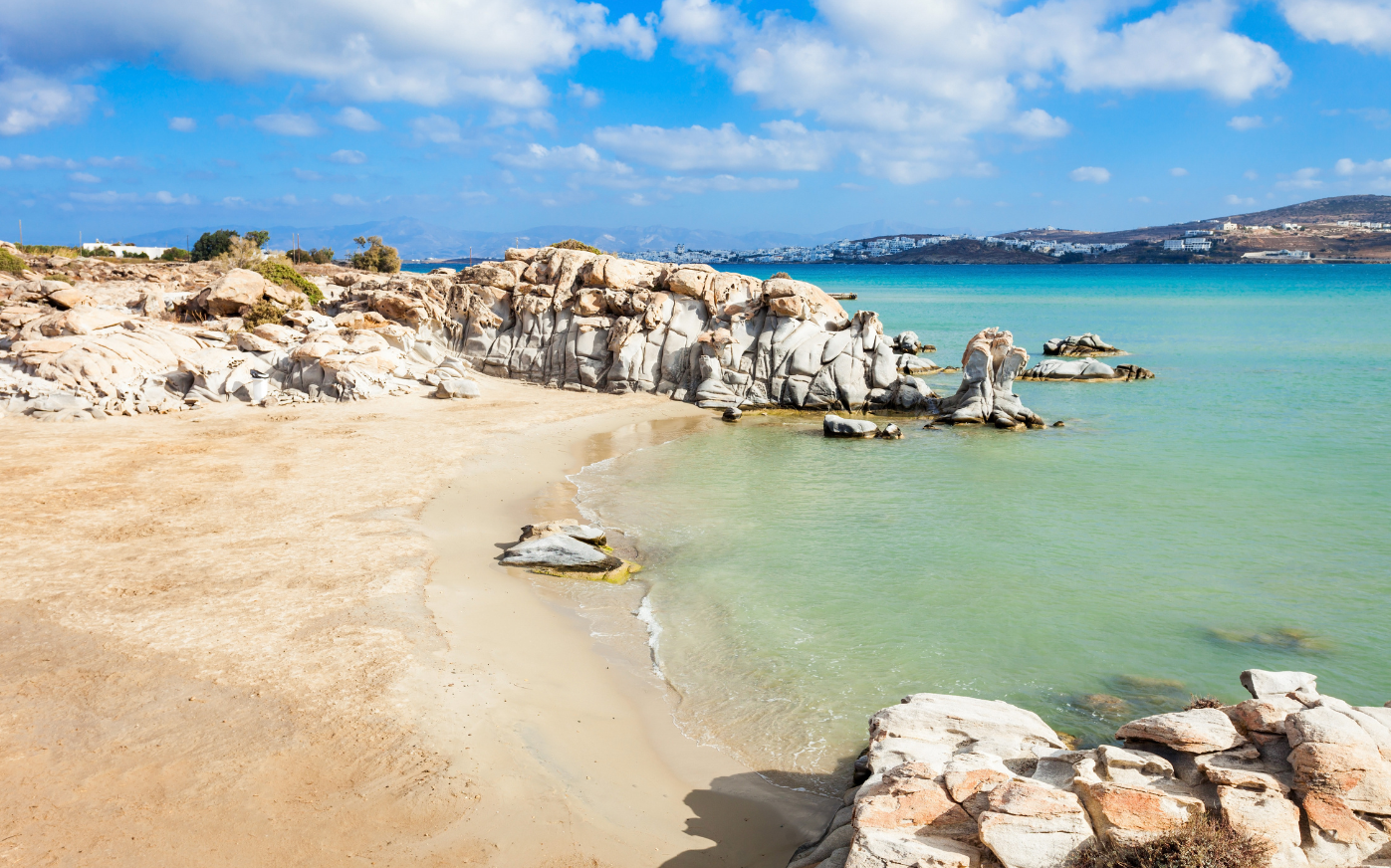
Quiet beaches on Paros
Paros has more than its fair share of historical sites. The island's marble quarries at Marathi, which are now largely abandoned but still visitable, were once among the most important in the ancient world, supplying the white marble used in some of antiquity's most celebrated works, including the Venus de Milo and the Nike of Samothrace. Walking through the old quarry tunnels is a fascinating experience and really emphasises this island's place in history.
Beyond the quarries, Paros has a rich tradition of art and craftsmanship that continues today. The quality of light on the island, which is clear, warm, and famously flattering, has attracted painters, sculptors, and photographers for generations, and the island has a quietly thriving arts community centred around Parikia and the surrounding villages.
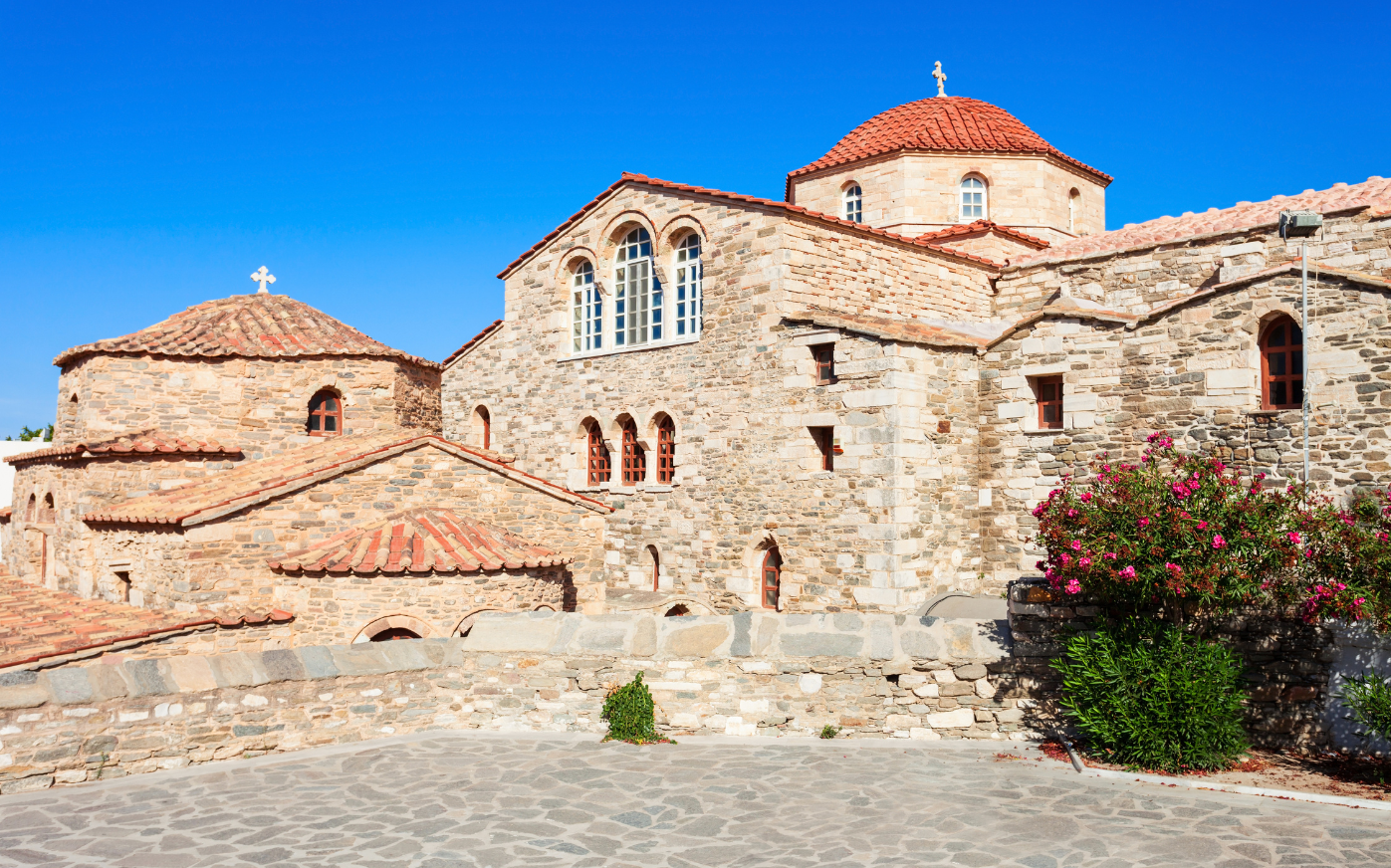
The Panagia Ekatontapyliani, the Church of a Hundred Doors in Parikia.
No visit to Paros is complete without a day trip to Antiparos, the tiny island just a short ferry ride away. Even quieter and more laid-back than its larger neighbour, Antiparos has a small village, some excellent beaches, and a famous stalactite cave that has been attracting visitors since ancient times.
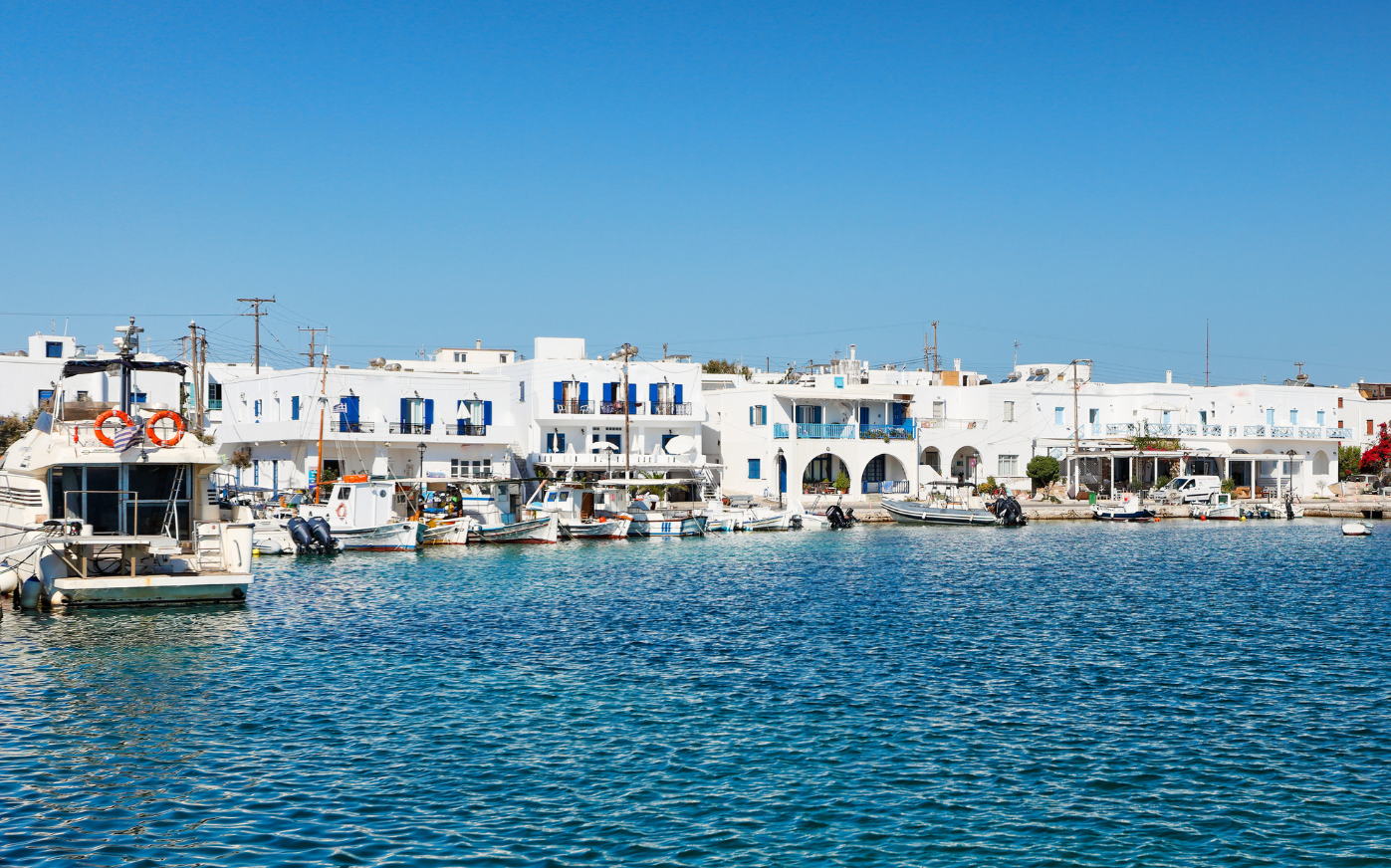
The Port in Antiparos.
In summary, Paros is a wonderful option for those looking for a quieter, more authentic villa holiday while still enjoying great quality food and drink, beautiful beaches and some historical sites to visit. The island can be reached by ferry from Athens and we recommend visiting from late May to early July as well as September to avoid the peak summer crowds but still enjoy warm weather.

 Prev
Prev